
Exploring the transformative impact of AI in modern health information systems, this introduction delves into the innovative ways in which artificial intelligence is reshaping the healthcare landscape. From enhancing patient care to streamlining data management, AI is at the forefront of revolutionizing the way healthcare is delivered and experienced.
As we navigate through the intricacies of AI applications in healthcare, a deeper understanding of its implications and potential unfolds, paving the way for a future where technology plays a pivotal role in improving health outcomes for individuals and populations alike.
Importance of AI in Health Information Systems
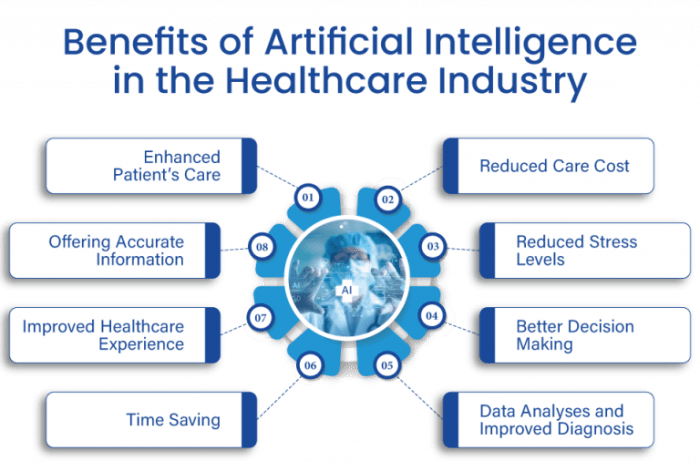
Artificial Intelligence (AI) plays a crucial role in transforming modern health information systems by revolutionizing the way healthcare data is managed and utilized.
Enhancing Healthcare Delivery and Patient Outcomes
AI has the potential to significantly enhance healthcare delivery and improve patient outcomes through various applications. For example, AI-powered systems can analyze large volumes of medical data to identify patterns and trends that human healthcare providers may overlook. This enables early detection of diseases, personalized treatment plans, and more accurate diagnoses.
Additionally, AI can be used to streamline administrative processes, optimize resource allocation, and improve the overall quality of care.
Improving Efficiency and Accuracy in Managing Health Data
AI technologies such as machine learning and natural language processing are instrumental in improving the efficiency and accuracy of managing health data. These technologies can automate repetitive tasks, such as data entry and coding, which helps reduce human error and enhance data quality.
AI algorithms can also analyze complex medical images, such as MRIs and CT scans, with a high degree of accuracy, leading to faster diagnosis and treatment planning.
Applications of AI in Health Information Systems
AI plays a crucial role in revolutionizing health information systems by enabling advanced data analytics, predictive modeling, diagnosis, treatment planning, personalized patient care, and population health management.
Data Analytics and Predictive Modeling
AI algorithms are utilized to analyze vast amounts of healthcare data, including patient records, medical images, and genetic information. By processing this data, AI can identify patterns, trends, and insights that help healthcare providers make informed decisions. Predictive modeling allows for the forecasting of potential health outcomes, enabling early intervention and preventive measures.
AI-powered Diagnosis and Treatment Planning
AI-powered tools such as machine learning algorithms can aid in diagnosing diseases and developing personalized treatment plans. These tools can analyze symptoms, medical history, and test results to provide accurate diagnoses and recommend optimal treatment strategies. This not only enhances the efficiency of healthcare delivery but also improves patient outcomes.
Personalizing Patient Care and Improving Population Health Management
AI enables healthcare providers to deliver personalized care based on individual patient characteristics, preferences, and needs. By leveraging AI technologies, healthcare professionals can tailor treatment plans, medication regimens, and lifestyle recommendations to each patient. Additionally, AI helps in managing population health by identifying at-risk individuals, predicting disease outbreaks, and optimizing resource allocation for better healthcare outcomes.
Challenges and Limitations of AI in Health Information Systems
AI has the potential to revolutionize healthcare by improving efficiency, accuracy, and patient outcomes. However, there are several challenges and limitations that need to be addressed to ensure the responsible use of AI in health information systems.
Ethical Considerations in AI Use in Healthcare
Ethical considerations are paramount when integrating AI into healthcare systems. It is essential to ensure that AI algorithms are transparent, accountable, and fair. Healthcare providers must consider the ethical implications of using AI to make critical decisions that directly impact patients' lives.
Data Privacy and Security Challenges in AI Applications
One of the major challenges in implementing AI in health information systems is ensuring the privacy and security of patient data
Potential Biases in AI Algorithms and Decision-Making Processes
Another concern with AI in healthcare is the potential biases in algorithms and decision-making processes. If not carefully monitored and addressed, AI systems can perpetuate existing biases in healthcare, leading to disparities in patient care and outcomes. It is crucial to regularly evaluate AI algorithms to identify and mitigate biases that could impact patient safety and well-being.
Future Trends and Innovations in AI for Health Information Systems
Artificial Intelligence (AI) continues to revolutionize the healthcare industry, with emerging technologies like machine learning and natural language processing playing a crucial role in shaping the future of health information systems.
Machine Learning and Natural Language Processing in Healthcare
Machine learning algorithms are being increasingly utilized to analyze complex medical data and provide valuable insights for healthcare professionals. Natural language processing, on the other hand, enables computers to understand, interpret, and generate human language, facilitating more efficient processing of medical records and patient information.
- Machine learning algorithms can help in early disease detection, personalized treatment plans, and predicting patient outcomes based on historical data.
- Natural language processing can assist in extracting relevant information from medical texts, enabling faster diagnosis and decision-making by healthcare providers.
AI in Precision Medicine and Genomics Research
AI has the potential to revolutionize precision medicine by analyzing individual genetic data to tailor treatment plans specific to each patient. Genomics research, coupled with AI algorithms, can uncover patterns in genetic variations and their impact on health, leading to more targeted therapies and interventions.
- AI-driven precision medicine can optimize drug development, reduce adverse effects, and improve patient outcomes by customizing treatments based on genetic predispositions.
- Genomics research powered by AI can accelerate the identification of disease markers, genetic mutations, and potential therapeutic targets, paving the way for more effective treatments.
Advancing Telemedicine and Remote Patient Monitoring with AI
The integration of AI technologies in telemedicine and remote patient monitoring systems has the potential to enhance access to healthcare services, improve patient engagement, and enable real-time monitoring of vital health parameters. AI-powered virtual health assistants and remote monitoring devices can revolutionize the way healthcare is delivered, especially in remote or underserved areas.
- AI-driven telemedicine platforms can provide remote consultations, automated symptom assessments, and personalized health recommendations, increasing convenience for patients and reducing healthcare costs.
- Remote patient monitoring devices equipped with AI algorithms can track patient vitals, detect anomalies, and alert healthcare providers in case of emergencies, enabling proactive interventions and improved patient outcomes.
Concluding Remarks
In conclusion, the profound influence of AI in modern health information systems is undeniable. As we anticipate further advancements and innovations in this field, it is evident that AI will continue to be a driving force in revolutionizing healthcare delivery, data management, and precision medicine.
Embracing the possibilities that AI offers, we embark on a journey towards a more efficient, personalized, and accessible healthcare system for all.
Answers to Common Questions
How is AI revolutionizing healthcare delivery?
AI is enhancing healthcare delivery by improving diagnostic accuracy, personalized treatment plans, and streamlining administrative processes, leading to better patient outcomes and increased efficiency.
What are the ethical considerations associated with AI in healthcare?
Ethical considerations include issues of data privacy, patient consent, transparency in AI algorithms, and ensuring unbiased decision-making processes to maintain trust and integrity in healthcare practices.
How does AI contribute to precision medicine and genomics research?
AI enables the analysis of large-scale genomic data to identify patterns, predict disease risks, and develop targeted therapies tailored to individual genetic profiles, advancing precision medicine and genomic research significantly.